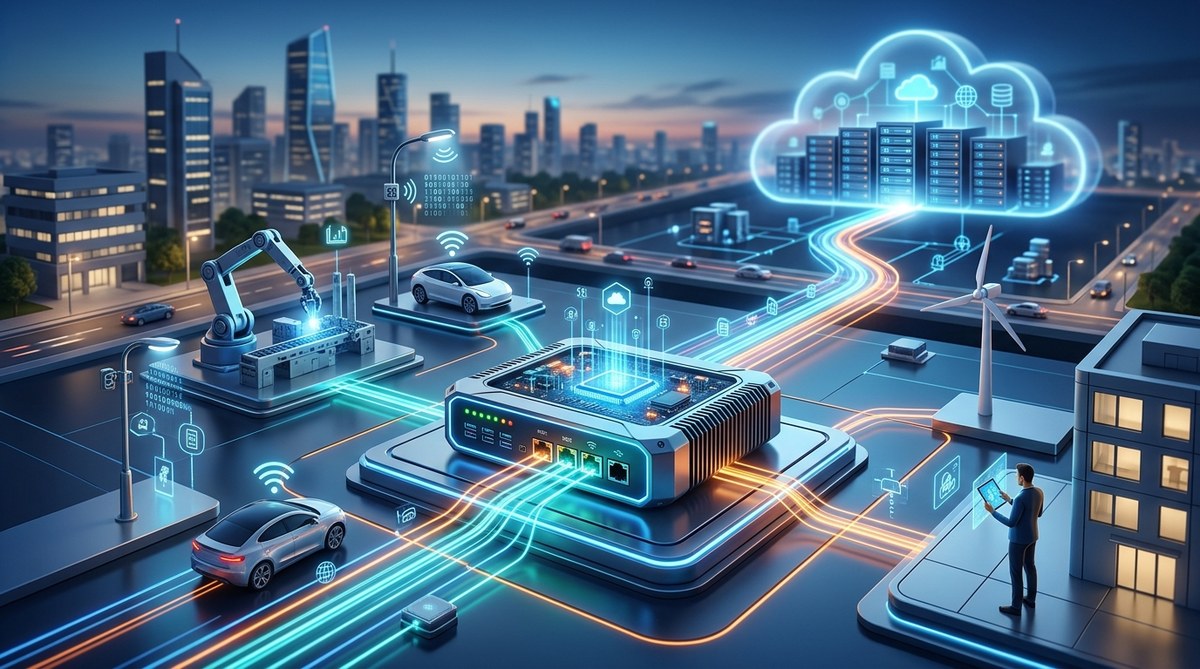
Edge computing is shaping how modern systems respond to the world around us. Instead of sending every bit of data to a distant data center, edge computing brings processing closer to the devices and sensors that generate data. The result is real time or near real time insights, lower bandwidth needs, and even improved security. If you are exploring pervasive computing or looking to empower IoT, AR, 3D printing workflows, or smart automation, edge computing is a foundational concept you will want to understand deeply. In this article we break down what edge computing is, how it works, and why it matters across industries.
What is Edge Computing?
Edge computing is a distributed computing approach that moves data processing and analytical tasks closer to the source of data generation. Instead of sending every data packet to a central data center or the cloud, nearby devices such as sensors, gateways, or local servers perform a portion of the work. This reduces the time it takes to react, lowers the amount of data that needs to travel over wide networks, and can improve data privacy by keeping sensitive information closer to where it originates.
Key ideas to remember about edge computing:
– Processing happens near the data source to minimize latency.
– It often involves a tiered architecture that includes devices at the edge, edge gateways or micro data centers, and centralized cloud services.
– It is not a replacement for cloud computing but a complementary model that handles real time tasks locally and defers heavier workloads to the cloud when needed.
Edge computing is closely tied to pervasive computing and IoT. In many deployments, IoT devices stream data to an edge gateway or a small data center, where initial filtering, aggregation, and analytics occur. The refined results are then sent to the cloud for long term storage and deeper insights, or used locally to trigger immediate actions. This approach makes edge computing especially suitable for industries and scenarios where timing matters or where bandwidth is costly.
How Edge Computing Works
The core idea in practice
At its heart, edge computing is about moving compute and storage resources closer to where data is produced. This enables rapid decision making and reduces reliance on a centralized data center for every operation.
Here is a simple flow you might see in a typical edge deployment:
1. Data is generated by devices such as sensors, cameras, or wearables.
2. An edge device or gateway performs initial processing, filtering, and lightweight analytics.
3. The system makes immediate decisions or sends only essential results to the cloud for deeper analysis.
4. Cloud services store long term data, run heavy workloads, and provide centralized dashboards.
5. The edge and cloud remain synchronized through secure, ongoing data exchange.
Architecture layers
Edge computing often uses a multi layer architecture. Understanding these layers helps you plan scalable and reliable solutions.
- Device layer
- Includes sensors, actuators, cameras, and embedded controllers.
- Performs basic processing, data pre conditioning, and event generation.
- Edge gateway and micro data center layer
- Handles more substantial processing, data fusion, and local storage.
- May run lightweight analytics, AI inference, or streaming pipelines.
- Cloud and centralized services layer
- Runs heavy analytics, model training, data warehousing, and long term storage.
- Coordinates policy, authentication, and orchestration for the edge.
- Network layer
- Ensures secure communication between devices, gateways, and cloud.
- Supports a mix of wireless and wired connections, often including 5G, Wi Fi, and Ethernet.
Data flow and processing models
Edge computing supports several data processing styles, depending on the use case:
- Event driven processing
- Data is acted upon as soon as an event occurs, such as a threshold breach or motion detection.
- Streaming analytics
- Continuous data flows are analyzed in near real time to detect trends or anomalies.
- Map reduce and batch processing at the edge
- Periodic aggregation and summarization tasks run on edge servers for efficiency.
- AI inference at the edge
- Lightweight machine learning models run on edge devices or gateways to produce decisions locally.
Important considerations when choosing a model include latency requirements, bandwidth costs, data sensitivity, and the available hardware at the edge.
Edge versus fog versus cloud
Understanding the distinction between edge, fog, and cloud helps in architecture design:
- Edge computing
- Processing happens on devices close to the source or near the site. Ultra low latency is possible.
- Fog computing
- A broader tier between the edge and the cloud. Fog nodes distribute processing to several nearby locations to handle larger loads and more complex analytics.
- Cloud computing
- Centralized processing and storage in data centers or public clouds. Ideal for heavy workloads, machine learning model training, and historical analytics.
Many deployments blend all three layers to balance latency, scale, and cost. The goal is to place the right workload in the right place while maintaining a cohesive data strategy.
Real world impact of edge architectures
Edge capable architectures unlock capabilities that can be difficult with a cloud only approach. Examples include:
– Real time quality control on a factory floor via camera analytics
– Immediate safety alerts in industrial settings
– Local AR/VR processing to reduce lag for immersive experiences
– Edge driven data summarization for remote locations with limited bandwidth
– Offline operation modes for critical systems during connectivity outages
Key Components of an Edge System
To design or evaluate an edge solution, you should know the core components involved.
- Edge devices
- Sensors, cameras, embedded boards, or wearables that generate data and perform basic processing.
- Edge gateways
- Hardware and software that aggregate data from multiple devices, perform more substantial processing, and manage security policies.
- Edge servers or micro data centers
- Local compute and storage resources that handle heavier analytics, AI inference, and data management close to the data source.
- Networking and connectivity
- The communication fabric that ties edge devices to gateways and to the cloud. This can include 5G, Wi Fi, Ethernet, and specialized industrial networks.
- Cloud services
- Centralized resources for deep analytics, long term storage, machine learning model training, and orchestration.
Benefits of Edge Computing
Edge computing offers a practical set of benefits that matter for modern businesses and developers.
- Reduced latency and faster response times
- Local processing eliminates round trips to distant data centers.
- Bandwidth optimization
- Only meaningful results or summarized data travel across networks, saving costs and reducing congestion.
- Improved data security and privacy
- Sensitive data can be processed where it is generated, reducing exposure within transit.
- High reliability and offline capability
- Edge systems can continue operating when connectivity to the cloud is interrupted.
- Real time analytics and decision making
- Instant insights enable operators to respond to changes quickly.
- Scalable and flexible deployments
- Edge resources can be added gradually, and workloads can be tuned between edge and cloud as needed.
Use Case Areas and Industry Examples
Edge computing applies across many fields. Here are some representative use cases organized by industry.
Manufacturing and industrial automation
- Real time monitoring of equipment health and predictive maintenance
- Localized control loops for robotics and automated assembly lines
- Quality control through on device video analytics
Healthcare and life sciences
- Patient monitoring with immediate alerting for abnormal vitals
- Privacy preserving analysis of sensitive data at the edge
- Remote clinics managing data locally before sending aggregates to a hospital system
Smart cities and transportation
- Traffic management systems that respond instantly to changing conditions
- Environmental sensing for air quality and noise monitoring
- Edge based camera analytics for safety and incident response
Energy and utilities
- Smart grid monitoring and fault detection at substations
- Local optimization of energy distribution and demand response
- Asset health monitoring for critical infrastructure
Retail and consumer experiences
- In store analytics and personalization with low latency
- AR assisted shopping experiences powered by edge AI
- Inventory tracking with edge cameras and sensors
AR, VR and immersive tech
- Real time rendering and tracking for augmented reality apps
- Local processing for smooth, latency sensitive experiences
IoT ecosystems and automation
- MQTT based telemetry and control with edge gateways
- WebSocket aided live data streams from devices
- Secure device onboarding and policy enforcement at the edge
Edge Computing and Related Technologies
Edge computing does not exist in a vacuum. It grows with other technologies that help organizations deploy, secure, and scale edge workloads.
- Edge AI
- Running AI models at or near the source of data to infer insights without sending data to the cloud.
- IoT protocols
- MQTT and WebSockets for lightweight, reliable data transport between devices and edge gateways.
- 5G and wireless networks
- High bandwidth, low latency connectivity that expands what is possible at the edge.
- Containers and orchestration
- Docker containers and Kubernetes at the edge enable portable, scalable workloads and easier management.
- Data visualization at the edge
- Lightweight dashboards and dashboards running close to data sources to enable fast decisions.
- Security by design
- Secure boot, attestation, encryption, and robust key management are essential for any edge deployment.
- Data pipelines
- Edge data ingestion, filtering, and enrichment pipelines connect edge with cloud data lakes and analytics platforms.
Security and Privacy at the Edge
Security is critical for edge deployments because many edge devices sit in potentially exposed environments. A practical approach includes:
- Secure boot and device attestation
- Verifying that hardware and software at startup are trusted.
- Encryption in transit and at rest
- Using strong cryptographic standards to protect data during transmission and storage.
- Identity and access management
- Strict authentication and authorization for devices and services.
- OTA updates and patch management
- Keeping firmware and software up to date to mitigate vulnerabilities.
- Zero trust principles
- Never trust by default; continuously verify identity, device health, and data integrity.
- Data minimization and privacy by design
- Process only what is necessary at the edge and anonymize data when possible.
Challenges and Considerations
Edge computing is powerful but not without complexity. Some common challenges include:
- Interoperability and standards
- A wide range of devices and software can slow integration without common standards.
- Management at scale
- Updating, monitoring, and securing hundreds or thousands of edge nodes is non trivial.
- Power and environmental constraints
- Edge devices often operate in harsh or remote locations with limited power.
- Data governance
- Balancing local processing with policy requirements and data residency rules.
- Model updates and drift
- AI models can degrade over time; maintaining accuracy at the edge requires lifecycle management.
- Reliability and fault tolerance
- Edge networks must gracefully handle outages and intermittent connectivity.
Getting Started with Edge Computing
If you are new to edge computing, here is a practical path to begin.
- Define the problem and goals
- Do you need lower latency, reduced bandwidth, or improved data privacy?
- Map data sources and workloads
- Identify which data should be processed locally and which can be sent to the cloud.
- Choose a target architecture
- Decide on device level processing, gateway based edge, or a micro data center approach.
- Start with a pilot
- Implement a small, well scoped use case to learn lessons and prove value.
- Consider security from day one
- Plan identity, encryption, and update mechanisms as part of the design.
- Evaluate tools and partners
- Look for platforms that support MQTT, WebSockets, containerization, and edge AI capabilities.
- Build a roadmap for scale
- Outline how you will extend edge workloads to more locations and workloads over time.
If you want hands on guidance, iq2s.org offers tutorials and practical walkthroughs that align with pervasive computing goals. You can explore how MQTT connectivity and WebSockets enable robust IoT communication at the edge, or how to visualize edge data for quick decision making.
Practical Tips for Architects and Developers
- Start small, scale gradually
- A single gateway with a couple of devices is a good starter project before expanding.
- Use edge friendly data practices
- Filter, aggregate, and summarize at the edge to reduce data volume.
- Leverage hybrid strategies
- Move selective workloads to the cloud for heavy analytics while keeping latency sensitive tasks at the edge.
- Invest in observability
- Telemetry, health checks, and dashboards help you maintain and optimize edge deployments.
- Prioritize security
- Build a zero trust model and enforce regular updates and device health checks.
Real World Example Scenarios
- A factory installs edge gateways on the shop floor to monitor vibration sensors and temperature readings. Local analytics detect anomalies and trigger maintenance alerts without sending raw data to the cloud. When needed, summarized data is streamed to a cloud analytics platform for long term trends.
- A smart city pilot uses edge cameras and edge AI to identify traffic conditions in real time and dynamically adjust traffic signals. The edge nodes keep latency low and reduce the amount of video data transmitted to central data centers.
- A hospital deploys edge computing to process patient monitoring data at the bedside. Alerts are generated instantly for clinicians, and sensitive data is retained within the local network until it is appropriate to upload to the central records system.
The Future of Edge Computing
As devices proliferate and networks become faster, edge computing will become even more capable. Trends to watch include:
– More on device AI and smaller, faster ML models that run on edge hardware.
– Greater use of 5G and advanced wireless networks to connect a vast number of edge devices with minimal delay.
– Increased standardization and interoperability across device families and platforms.
– Deeper integration with other pervasive computing technologies such as AR, IoT, and 3D printing workflows.
For people who love practical tutorials and hands on learning, the edge space presents a wealth of opportunities. Whether you are implementing WebSockets for IoT projects, setting up MQTT brokers on an edge gateway, or building live data visualizations from edge data, there are clear paths to mastery.
FAQs
- What is the main purpose of edge computing?
- To process data closer to its source, reducing latency, saving bandwidth, and enabling faster decisions.
- How is edge computing different from cloud computing?
- Edge computing processes data locally or near the data source, while cloud computing processes data in centralized data centers. They complement each other.
- What are common edge architecture patterns?
- Device level processing, gateway level processing, micro data centers, and cloud connected models.
- What industries benefit most from edge computing?
- Manufacturing, healthcare, smart cities, energy, transportation, retail, and AR/VR applications are prime examples.
- What security practices are essential for edge?
- Secure boot, device attestation, encryption in transit and at rest, strong identity management, and regular software updates.
Learn More and Get Started with iq2s.org
Edge computing is a foundational element of pervasive computing. It plays nicely with the tutorials and topics you already trust on iq2s.org, such as MQTT connectivity, WebSockets for IoT, data visualization, and edge security. If you want a practical, beginner friendly approach, start with a small edge pilot that focuses on a single data stream and a gateway. From there you can expand to multiple devices, add AI at the edge, and connect to centralized analytics in the cloud.
- Practical steps
- Define a concrete problem that benefits from local processing.
- Choose a simple edge gateway and a couple of sensors to start.
- Implement basic data filtering and local alerts.
- Add cloud integration later for deeper insights and long term storage.
- Topics to explore next
- MQTT on the edge, secure device onboarding, and edge AI inference.
- Real time data visualization dashboards built with edge data.
- AR and visualization applications that rely on low latency edge processing.
If you want to dive deeper, revisit the sections above and map your own use case to the edge architecture patterns described. With the right design choices, edge computing can unlock faster responses, smarter automation, and more secure data handling for your projects and products.
No Responses